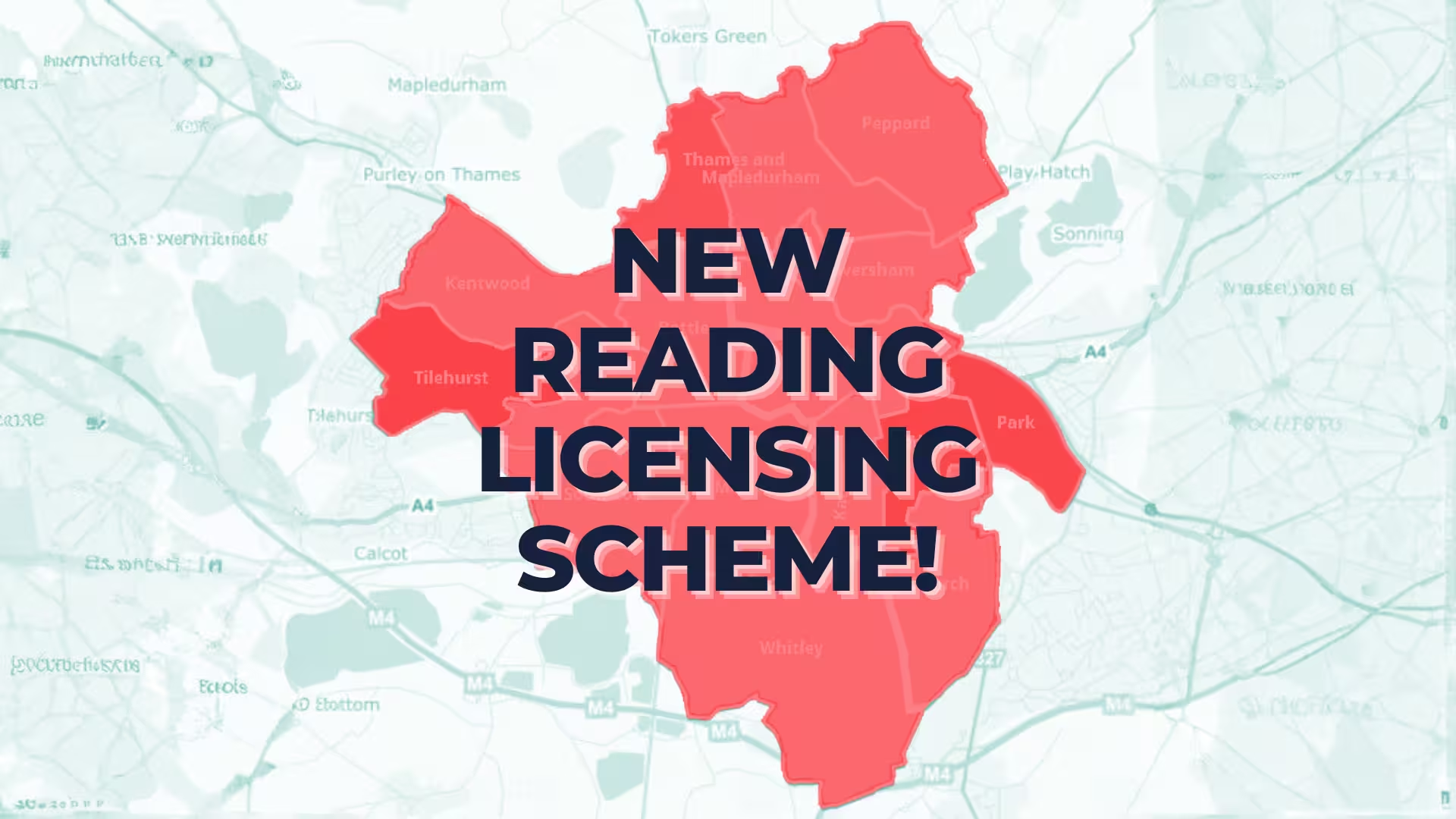
Is your Property Affected?
From 1 March 2026, you must hold an HMO licence if your property:
- Is occupied by 3 or more people
- Comprises 2 or more households
- Shares facilities such as kitchens or bathrooms
This now includes:
✔ Shared flats and houses of any storey
✔ 3- and 4-person shared lets that were previously exempt
Properties already falling under the mandatory HMO licensing regime (5+ occupants) remain licensed as usual, the new scheme expands coverage to smaller HMOs.
Important: Buildings that are Section 257 HMOs aren’t automatically included, but individual flats within them can still be licensable if they meet the HMO definition.
Key Dates
1 Feb 2026 | Agent registrations open (approximate timeline from council guidance) |
1 Mar 2026 | Mandatory compliance begins for all HMOs (3+ sharers) |
2026 onwards | Applications processed via a delivery portal (not the existing platform) |
Planning Controls Also Apply: Article 4 HMO Directions Restrict New HMOs in Large Parts of Reading
Separate from licensing, Reading Borough Council operates multiple Article 4 Directions that remove permitted development rights for converting a family home (Use Class C3) into a small HMO (Use Class C4).
This means that in many parts of Reading:
- Changing a property from single-family use to a 3–6 person shared house requires full planning permission
- You cannot rely on “permitted development” rights in Article 4 HMO areas
- An HMO licence does not legalise an unlawful planning use
Landlords must satisfy both:
Planning law — is the HMO use lawful in this location?
Licensing law — does the property require and hold an HMO licence?
Fail either, and you are exposed to enforcement.
Getting a licence does not protect you from planning action.
Planning enforcement can still require you to stop using the property as an HMO.
What Reading Landlords Need to Know
📍 What is an HMO?
Under Reading’s interpretation:
➡ A House in Multiple Occupation is any house or flat occupied by three or more people from two or more households sharing amenities such as kitchen or bathroom space.
This aligns with the statutory definition, which means shared properties of all sizes can be licensable.
Licensing Requirements: What You’ll Have to Do
When the Additional HMO Licensing scheme goes live, landlords will be required to:
✔ Apply for a licence for each HMO
✔ Provide evidence of safe property management
✔ Demonstrate compliance with statutory safety standards
✔ Maintain up-to-date certificates and amenity information
The council will process applications via a dedicated portal with support from a delivery partner.
Reading has not yet published exact fees and licence conditions at the time of writing, but you should prepare the usual documentation (gas safety, electrical safety, fire alarm provision, management arrangements) as these commonly underpin HMO licence applications.
Enforcement & Penalties
Once the scheme is live, operating a licensable HMO without a licence is an offence. Councils have wide enforcement powers including:
⚠️ Fines up to £30,000 through civil penalties
⚠️ Rent Repayment Orders
⚠️ Loss of certain eviction rights for unlicensed properties
Don’t assume “I’ll apply later” protects you, councils can pursue landlords even if applications are submitted late or incorrectly.
FAQs
Q: Does this apply to all rented properties?
No, only HMOs where 3+ sharers live together. Selective licensing could apply to all rented homes if and when the specific ward schemes are implemented.
Q: Can flats in converted buildings be excluded?
Section 257 converted buildings themselves aren’t covered, but individual flats that meet the HMO definition still are.
Q: When can I apply for a licence?
The council’s current timeline indicates agent registration opens before 1 March 2026 with applications going live on or after that date.
What You Should Do Now
✔ Identify properties in your portfolio that meet the HMO criteria
✔ Prepare compliance data and certificates ahead of applications
✔ Plan application timing so you’re not scrambling when the scheme launches
✔ Check if there are selective licensing proposals near you
Stay Ahead of Enforcement
Don’t treat this as a distant administrative update, Reading Borough Council is using these powers to raise safety and management standards in the private rented sector. Landlords who delay compliance risk fines, legal exposure, and loss of control over tenancy management.
Need Help Complying?
Yuno can help you:
- Identify which properties require licences
- Prepare and submit compliant applications
- Track renewals and certificates
- Integrate compliance into your property workflows
👉 Book a compliance review before March 2026 to avoid enforcement risk.